How to Drain and Refill Your Spa Pool?
.jpg?auto=format,compress&q=90)
Quick answer:
To drain and refill your spa pool, turn off the power, open the drain valve on the side of the cabinet, and clean the shell and filters before refilling via the filter box to the recommended water line. Spa pool water should be fully replaced every 3–4 months to prevent a buildup of total dissolved solids (TDS), scale, and organic contaminants that can damage internal components and reduce the effectiveness of your sanitiser. Once refilled, add a shock dose of chlorine, test and balance the pH (7.2–7.8) and Total Alkalinity (80–120 ppm), then allow the pumps to circulate for 20 minutes before replacing the cover to heat.
Watch our "How to drain your spa pool" video:

One aspect of spa pool ownership rarely discussed is the process of replacing your water. We thought we should fill this void with a quick explanation around how often you should change your water, how it’s done, and why you need to do it. Along with adding the appropriate chemicals, washing, and replacing your spa pool’s filters, your water needs to be completely replaced every so often, much the same as changing the oil in your vehicle. Dive into this article to gain a comprehensive understanding of this important process.
➡️ Download our easy "How to Drain Your Spa Pool" file HERE
Why You Need to Change Your Spa Pool Water
Depending on how often your spa pool is used and the bather load it’s servicing, your water will reach a point where it can no longer dissolve certain chemicals – like calcium chloride. This will result in scaly residue making its way onto the side of your spa pool and into the internal componentry where it can wreak havoc and cause major damage. On top of that, your spa water will eventually end up with many organic contaminants present, such as perfume, shampoo, and all kinds of body fluids. These contaminants build up and combine to create what we call total dissolved solids (TDS). After a while, the TDS will build up to a point where it will prevent the water from mixing with your sanitiser/chlorine. This is a situation you want to avoid. Fortunately, replacing your water will let you do just that.
How to Drain Your Spa Pool Water
This is the easy part – drain the water via the valve located on the side of the spa pool cabinet. If you want to empty the water further away from the spa, you can attach a hose to the valve and direct it to an area of your choice. There will likely be a small amount of water left in the footwell, we recommend using a sponge and bucket to remove this, so you can clean componentry like jet intakes.
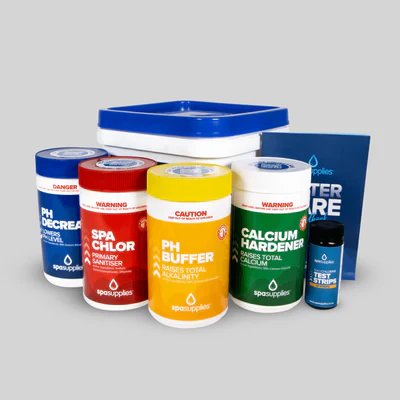
Everything you need to get your spa set up and keep your water crystal clear.
The kit contains
1x 1kg Spa Chlor
1x 1kg pH Buffer
1x 1kg pH Decrease
1x 1kg Calcium Hardener
1x Spa Supplies Chlorine Test Strips
1x Water Care Handbook
Cleaning Your Spa’s Shell
Giving your spa pool’s shell a good clean before you refill it with fresh water is an excellent chance to rid the area of bacterial residue that may be clinging to the walls. Wipe down the shell with a general household all-purpose cleaner, but use the solution sparingly. A microfibre cloth will help to remove scale buildup and make sure to clean the whole surface area, including the spa’s jet intakes in the bottom of the footwell. Rinse the spa pool down if there is residue from the cleaning solution present, and bucket out the excess water. This is also a great time to remove your filters and wash them in a filter cleaning solution, or completely replace them if necessary.
Refilling Your Spa Pool
Ensure power to the spa pool is off and your filters are removed, then place your hose into the filter box and fill your spa to the recommended line (see manual if you’re unsure where this is). Once filled, place your filters back in their boxes and turn on the power to your spa. This will initiate an automatic ‘priming cycle’ to test the spa’s components and prepare itself to heat up – allow five minutes for this process. Once complete, we recommend you give your spa pool’s water a ‘shock dose’ of chlorine to ensure it is the cleanest, clearest, and most inviting water possible. Following your ‘shock dose’, test the water’s pH and Total Alkalinity levels, and add appropriate chemicals to balance if required. After that, allow your spa’s pumps to circulate for 20 minutes with covers off so the chemicals can mix, make sure your set temperature is at your desired level, and replace the cover to allow time for heating. Once your water is heated, all there is left to do is enjoy an indulgent soak in your pristine spa pool.
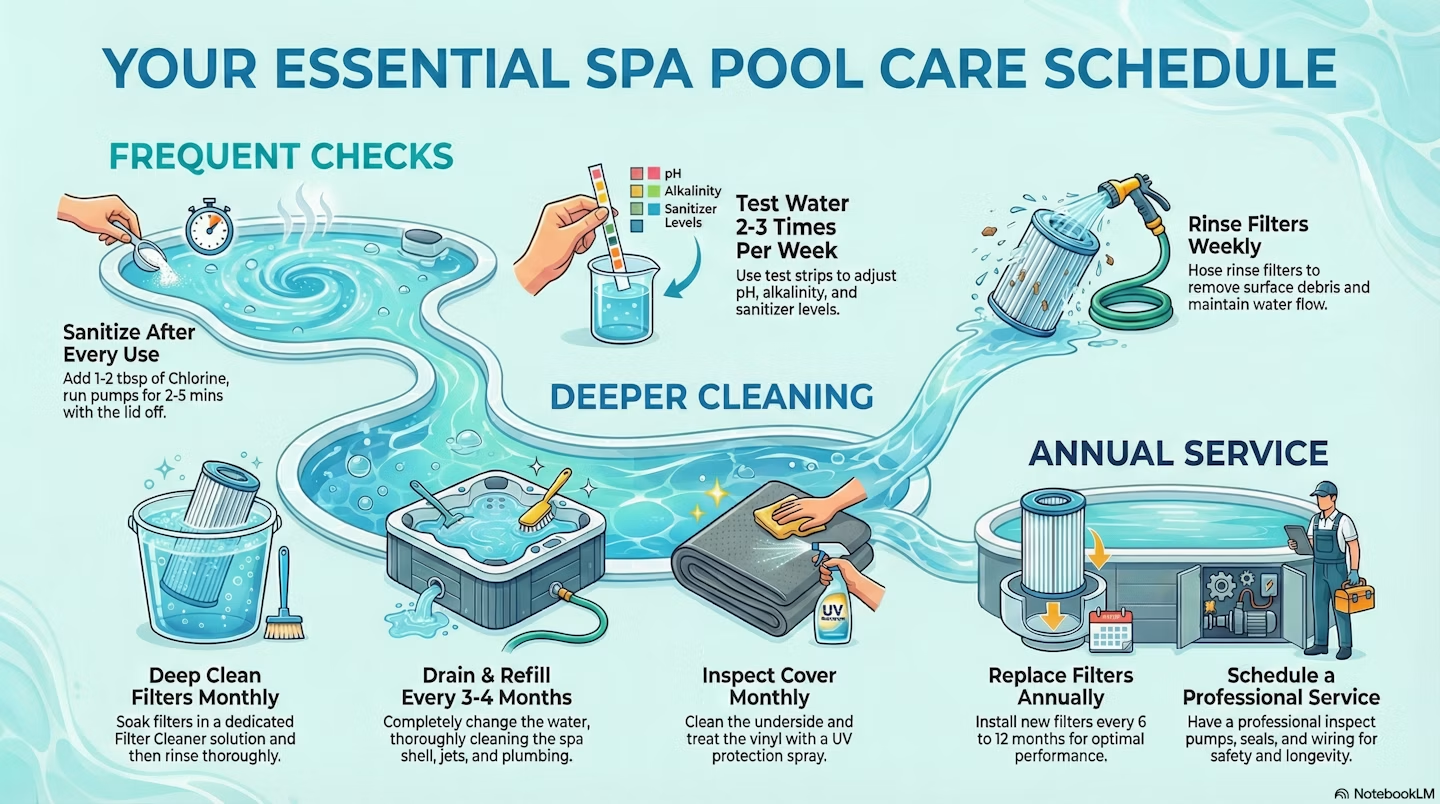
Spa Pool Maintenance Checklist

Every Use
☐ Check water is clear, odour-free (test/fix if cloudy/foamy using "No Foam")
☐ Run pumps 2-5 mins after 1 -2 table spoons of Chlorine (lid off)
☐ Secure cover tightly post-use and replace Cover Clips if needed
2-3x Weekly
☐ Test & adjust pH (7.2-7.8), alkalinity (80-120 ppm), sanitiser (3-5 ppm) with Test Strips
☐ Top up Chlorine; shock after heavy use with Chlorine Shock or Non-Chlorine Shock
☐ Skim surface debris
Weekly
☐ Hose rinse filters using a Waterwand
☐ Wipe waterline/scum with Spa Cleaner
☐ Test temp/functions (pumps, jets, lights)
Monthly
☐ Deep clean filters (soak/spray with Filter Cleaner then rinse)
☐ Inspect/clean cover (underside, treat vinyl) and treat with UV Protection Cover Spray
☐ Check for leaks/noises/error codes
Every 3-4 Months
☐ Drain, thoroughly clean shell/jets/plumbing
☐ Refill, balance water (Chlorine, PH-Buffer, PH-Decrease, Calcium Hardener), startup shock dose
☐ Flush lines if biofilm suspected
Yearly (Spring Prep)
☐ Pro/DIY service: pumps, seals, wiring
☐ Replace filters (6 to 12 months old)
☐ Check cover and purchase replacement cover if needed to make sure you spa pool is protected
Everything you need to get your spa set up and keep your water crystal clear.
The kit contains
1x 1kg Spa Chlor
1x 1kg pH Buffer
1x 1kg pH Decrease
1x 1kg Calcium Hardener
1x Spa Supplies Chlorine Test Strips
1x Water Care Handbook
Written by our Spa Pool Expert - Kyle Clement